Mastering the Building Blocks of a Healthy Diet
When it comes to nutrition, it’s easy to get caught up in counting calories and miss the bigger picture. But a truly healthy diet goes beyond just numbers—it’s about giving your body the right mix of nutrients to thrive. That’s where macro-nutrients (macros) and micro-nutrients (micros) come in. These two categories of nutrients work hand in hand to keep you energized, support your immune system, repair your tissues, and keep everything running smoothly.
In this comprehensive guide, we’ll dive deep into what macros and micros are, why they matter, and how you can strike the perfect balance to feel your best. Whether you’re new to nutrition or looking to fine-tune your eating habits, this is your roadmap to a healthier, more vibrant you.
What Are Macronutrients (Macros)?
Macronutrients are the big guns—nutrients your body demands in hefty doses daily. They deliver energy (in calories) and form the foundation for muscles, hormones, and more. Meet the trio: carbohydrates, proteins, and fats.
1. Carbohydrates: Your Energy Lifeline
Carbs are your body’s go-to fuel, broken down into glucose to power your brain, muscles, and everything in between. Demonized by fad diets, they’re actually essential—when you choose wisely.
- Types of Carbs:
- Simple Carbs: Fast-acting sugars in fruits, honey, and candy. Great for a quick boost, but overindulgence can crash your energy.
- Complex Carbs: Slow-burning starches and fiber in whole grains, veggies, and beans. They sustain you and keep blood sugar steady.
- Top Picks: Berries, sweet potatoes, oats, brown rice, and lentils.
- Daily Goal: Aim for 45-65% of your calories from carbs—about 225-325 grams on a 2,000-calorie diet, per the Dietary Guidelines for Americans.
- Why They’re Key: Skimp on carbs, and expect brain fog, fatigue, or a lackluster workout. They’re your energy MVP.
2. Proteins: Your Body’s Builders
Protein is your repair crew, constructing muscles, crafting enzymes, and bolstering immunity with antibodies. It’s the backbone of resilience.
- Types of Protein:
- Complete Proteins: Packed with all nine essential amino acids. Think chicken, eggs, fish, soy, and quinoa.
- Incomplete Proteins: Missing some amino acids but powerful in pairs—like rice and beans. Nuts, seeds, and lentils shine here.
- Top Picks: Turkey, salmon, eggs, Greek yogurt, tofu, and chickpeas.
- Daily Goal: Get 10-35% of calories from protein—50-175 grams on 2,000 calories, depending on goals (more for muscle-building), says the National Academy of Medicine.
- Why They’re Key: Low protein? Expect slow healing, weak immunity, or brittle hair. It’s non-negotiable.
3. Fats: The Misunderstood Heroes
Fats are finally shedding their bad rep. They fuel your brain, balance hormones, and help absorb vitamins—all while making meals delicious.
- Types of Fats:
- Unsaturated Fats: Heart-healthy stars like olive oil, avocados, and salmon (omega-3s).
- Saturated Fats: Butter and steak—fine in moderation, per the American Heart Association.
- Trans Fats: Artificial junk in processed foods—ditch them.
- Top Picks: Avocados, almonds, chia seeds, olive oil, and mackerel.
- Daily Goal: Target 20-35% of calories from fats—44-78 grams on 2,000 calories.
- Why They’re Key: Too little fat disrupts hormones, dulls skin, and leaves you hungry. The right fats are magic.
Macronutrient Cheat Sheet
| Macronutrient | Main Job | Top Sources | Calories per Gram | Daily Intake |
|---|---|---|---|---|
| Carbohydrates | Fuels your body | Fruits, grains, legumes | 4 cal/g | 45-65% |
| Proteins | Builds and repairs | Meat, fish, tofu | 4 cal/g | 10-35% |
| Fats | Supports cells, hormones | Avocados, nuts, fish | 9 cal/g | 20-35% |
What Are Micronutrients (Micros)?
Micronutrients are the unsung heroes—needed in tiny amounts but packing a massive punch. Vitamins and minerals keep your body humming, warding off deficiencies and powering countless processes.
1. Vitamins: Your Body’s Catalysts
Vitamins spark everything from immunity to energy production. They split into water-soluble (replenish often) and fat-soluble (stored longer).
- Water-Soluble:
- Vitamin C: Cold-fighter and skin-saver in oranges and peppers (NIH).
- B Vitamins: Energy and brain boosters in eggs and greens.
- Fat-Soluble:
- Vitamin A: Eyesight and skin champ in carrots.
- Vitamin D: Bone and mood lifter in fish and sunlight (Mayo Clinic).
- Vitamin E: Cell protector in nuts.
- Vitamin K: Blood and bone ally in kale.
- Why They’re Key: Miss out, and face fatigue, weak immunity, or worse—think scurvy from low C!
2. Minerals: Your Structural Support
Minerals, from the earth to your plate, come as major (big doses) or trace (tiny but mighty).
- Major Minerals:
- Calcium: Bone and muscle must-have in dairy and greens.
- Potassium: Heart and muscle helper in bananas.
- Magnesium: Energy and calm in nuts and chocolate.
- Trace Minerals:
- Iron: Oxygen carrier in spinach and meat (Red Cross).
- Zinc: Immunity booster in oysters.
- Iodine: Thyroid fuel in seaweed.
- Why They’re Key: Low minerals mean weak bones, tiredness, or a sluggish system.
Micronutrient Cheat Sheet
| Micronutrient | Main Job | Key Examples | Top Sources |
|---|---|---|---|
| Vitamins | Metabolism, immunity | Vitamin C, D | Citrus, fish |
| Minerals | Bones, oxygen flow | Iron, Calcium | Greens, meat |
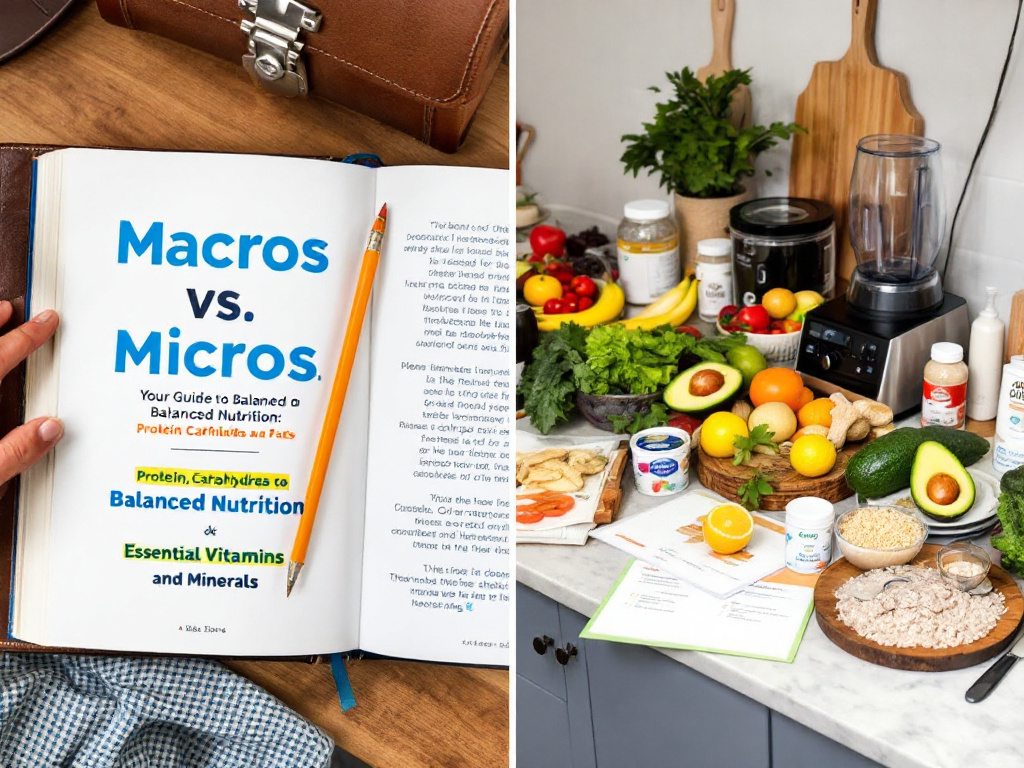
Macros vs. Micros: The Perfect Team
Macros are the fuel and frame; micros are the spark and polish. You need both to shine.
- Macros: Energy and structure, measured in grams.
- Micros: Precision players, measured in milligrams or micrograms.
- Synergy: Fat-soluble vitamins (A, D, E, K) need fats to work—skip fats, miss micros!
Why Balance Wins
A balanced diet isn’t just filling—it’s transformative. Here’s the payoff:
- Steady Energy: Carbs, fats, and B vitamins keep you buzzing.
- Rock-Solid Body: Proteins and calcium fortify you.
- Ironclad Immunity: C, D, and zinc fend off bugs.
- No Gaps: Avoid anemia or fatigue with proper micros.
Golden Rule: Whole foods trump processed junk. A rainbow plate beats a beige snack any day.
Your Game Plan: Nail the Balance
Ready to eat smarter? Start simple with these steps:
Step 1: Scan Your Plate
- How: Check your meals—too many carbs, not enough greens?
- Fix: Add spinach to eggs or swap fries for roasted veggies.
Step 2: Track Smart
- How: Use Cronometer or MyFitnessPal for a nutrient snapshot.
- Why: Spot low magnesium or fats fast—no perfection required.
Step 3: Plug the Holes
- How: Tired? Up iron with steak. Brittle nails? Add zinc via seeds.
- Next Level: Blood test with a doc if you’re way off.
Step 4: Keep It Fresh
- How: Rotate proteins, try new veggies, mix up fats.
- Why: Variety = broader micro coverage.
A Day of Winning Eats
- Breakfast: Oatmeal with berries, chia, and yogurt (carbs, protein, Vitamin C).
- Lunch: Chicken salad with spinach, avocado, and olive oil (protein, fats, Vitamin K).
- Snack: Almonds and an orange (fats, Vitamin C).
- Dinner: Salmon, quinoa, and broccoli (protein, carbs, Vitamin D).
Pitfalls to Dodge
Watch Out:
- Macro Overload: All protein, no carbs = burnout.
- Micronutrient Neglect: Focusing only on macros can still leave you tired, foggy, or sick.
- One-Size-Fits-All Thinking: Your needs differ from others—tune in to your body.
Your Nutrition Adventure Begins
Balance isn’t about flawless execution—it’s about consistent effort. Load up on whole foods, tweak as you go, and enjoy the ride. Swap a soda for fruit, track a day, or cook something bold. Small wins stack up.
Nutrition’s a marathon, not a sprint. Fuel up right, and feel the difference—one tasty bite at a time!